When temperatures rise, Spanish gastronomy surrenders to two of its most universal, refreshing, and nutritious creations. However, the line that separates them often generates debate even among the most demanding palates.
Although at first glance they may seem like twin dishes born in southern Spain, the difference between salmorejo and gazpacho lies in their culinary chemistry. It is not just about the ingredients that compose them, but the technique used to integrate their flavors.
From the kitchens of Grupo Dani García, we understand that respecting tradition is the first step towards excellence. Therefore, today we break down the definitive keys to distinguish, prepare, and enjoy these two emblems of our land.
Texture and Culinary Technique: Cold Soup or Emulsion?
The most common mistake is to categorize both preparations under the same label of “cold soup.” At a technical and molecular level, their structure is completely different, which directly defines their behavior in the mouth.
Traditional Andalusian gazpacho is, strictly speaking, a cold soup or a vegetable blend. Its liquid base allows the ingredients to be completely crushed and mixed, offering a light, fluid texture that is perfect for drinking directly from a glass.
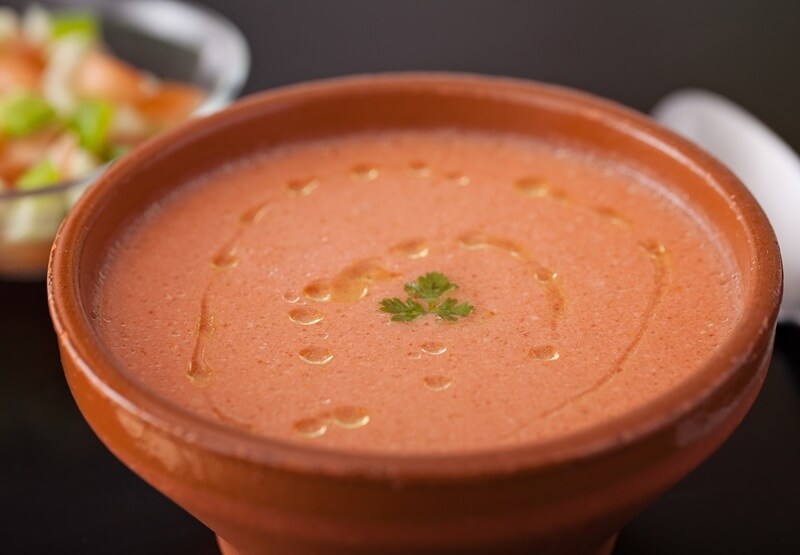
On the contrary, Cordoban salmorejo is a pure emulsion. By dispensing with water and relying on the mixture of tomato, plenty of bread, and extra virgin olive oil (EVOO), a dense, velvety, and smooth cream is created, designed exclusively to be eaten with a spoon.
Historical Origins: From Al-Andalus to Modern Kitchens
The history of these cold soups dates back centuries, long before the tomato arrived in Europe from the Americas. Originally, the ancestors of these dishes were simple mixtures of bread, water, olive oil, garlic, and vinegar.
These early versions were consumed by peasants and Roman soldiers to sustain themselves during long, exhausting days working in the sun. It was not until the 16th century that the tomato was introduced, giving them the vibrant red color and slight acidity we know today.
This evolution transformed a humble sustenance into a gastronomic masterpiece. Understanding this history helps us appreciate why the flavors of Andalusia remain so deeply rooted in the region’s cultural identity today.
Ingredient Comparison: The Tomato, the EVOO, and the Nuances
The soul of both preparations is the tomato, preferably at its optimal point of ripeness, such as the pear or vine tomato. However, their accompanying ingredients mark the fundamental difference between the two recipes.
While gazpacho is a vibrant vegetable cocktail straight from the garden, salmorejo is a beautiful monument to culinary minimalism. To help purists properly celebrate International Gazpacho Day or salmorejo season, here is the exact comparison:
| Ingredient | Andalusian Gazpacho | Cordoban Salmorejo |
| Ripe Tomato | Yes (Main ingredient) | Yes (Main ingredient) |
| Garlic | Yes (In moderation) | Yes (Subtle touch) |
| Extra Virgin Olive Oil | Yes (Light emulsifier) | Yes (Key for thick emulsion) |
| Salt | Yes | Yes |
| Bread (Telera or Candeal) | Yes (Very small amount) | Yes (Large amount, base texture) |
| Water | Yes (To lighten the mix) | No (Purely emulsified texture) |
| Vinegar | Yes (Sherry vinegar preferred) | No (In the orthodox recipe) |
| Green Pepper | Yes | No |
| Cucumber | Yes | No |
| Onion | Yes (Optional, by region) | No |
Water and Bread: The Science Behind the Thickness
The proportion of breadcrumb is the real secret to mastering these iconic recipes. In gazpacho, bread is a secondary actor that barely provides body, leaving the main structural role to the hydration of cold water.
In salmorejo, the bread—historically traditional Cordoban telera bread—acts as the main structural pillar. By absorbing the tomato juices and slowly emulsifying with a steady drizzle of olive oil, we achieve that rich consistency.
It is this delicate balance that allows us to experience Andalusia in every bite, deeply respecting the traditional mashing and blending times that local grandmothers perfected over generations.
Classic Garnishes vs. Haute Cuisine Alternatives
The way these liquid jewels are served and garnished also dictates their true identity. Gazpacho, given its fluidity, is usually served plain in a glass or, in its plated version, accompanied by a very fine brunoise of its own fresh vegetables.
Salmorejo demands real substance on its surface to contrast with its incredible creaminess. Tradition dictates topping it with finely chopped hard-boiled egg and premium shavings of acorn-fed Iberian ham, providing chewable textures and a saline touch.
Over time, haute cuisine has explored these profiles by incorporating premium ingredients such as tuna belly, mojama (cured tuna), ling roe, and even savory ice creams to greatly enhance the thermal contrast and tasting experience.
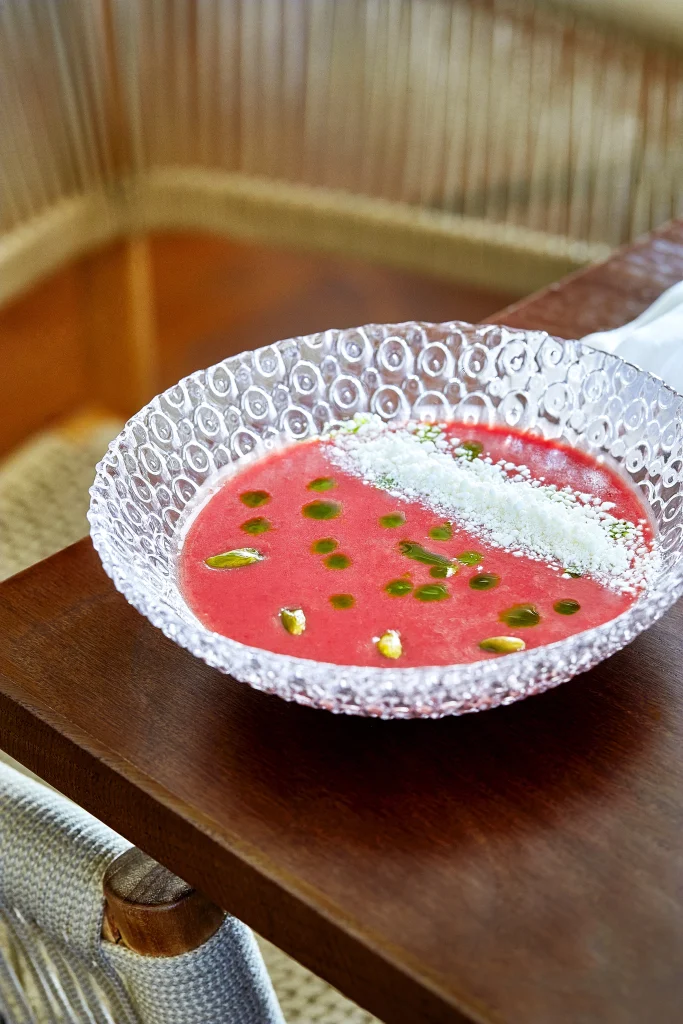
How Dani García Elevates the Traditional Andalusian Recipe Book
For chef Dani García, Andalusian cuisine is a brilliant blank canvas where culinary innovation perfectly embraces total respect for the finest local products.
Elevating salmorejo or gazpacho does not mean altering their DNA, but perfecting their execution. This involves sieving the purées until achieving a texture free of impurities, playing with roasted cherry tomatoes, and adding subtle smoky touches.
To truly understand this difference on the palate, there is nothing quite like tasting these recipes firsthand. You can cool off with an iconic Andalusian gazpacho by the sea, enjoying the vibrant atmosphere at BiBo Tarifa, or immerse yourself in the deepest roots of our tradition by tasting an authentic salmorejo at Tragabuches Marbella. Both spaces perfectly reflect an absolute respect for local products and the chef’s passion for elevating our homeland’s gastronomy to its highest expression.
In the end, both an icy gazpacho and a smooth salmorejo are the perfect prelude to a memorable meal. They brilliantly whet the appetite before moving on to other wonders, such as the classic Spanish potato omelette recipe.
If you want to go a step further and experience our unique vision of Andalusian gastronomy firsthand, you can discover unforgettable culinary experiences and gourmet gifts at the Grupo Dani García online store. It is the perfect place for those looking to savor the excellence of our restaurants or surprise the most demanding palates with a truly memorable gift.