Madrid | Grupo Dani Garcia

When the heat hits, there’s nothing like a good summer recipes by Grupo Dani García. And if there’s one thing Leña, Lobito de Mar, Tragabuches and BiBo have in common, it’s that they know how to embrace the summer season. Light, fresh and flavour-packed dishes.

Fresh is the new green

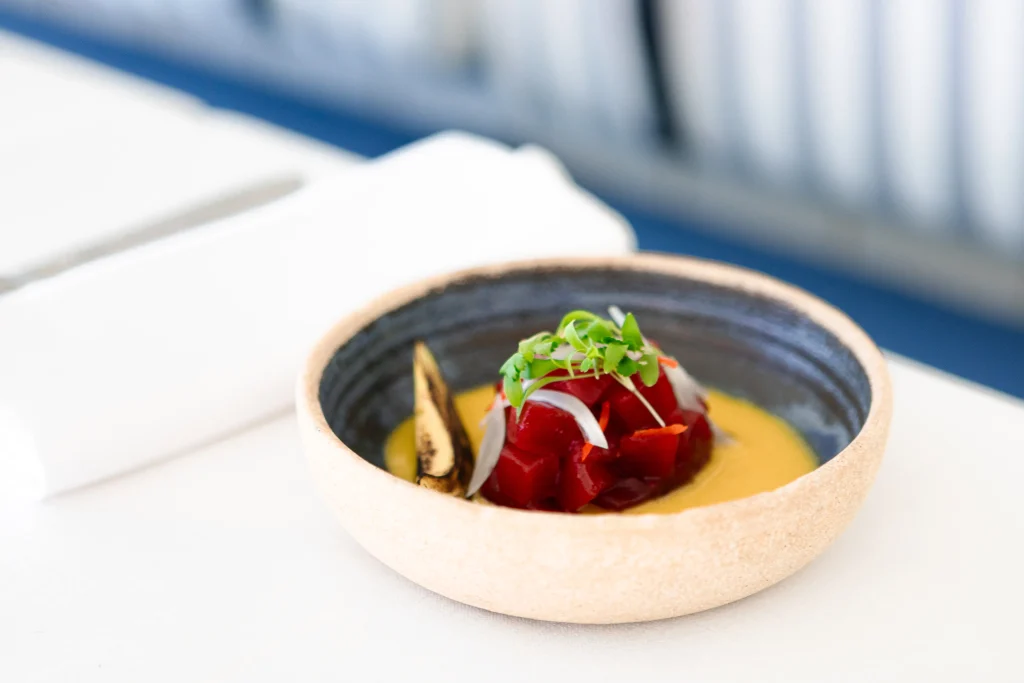
At BiBo Madrid, there’s a salad made with watermelon, tuna and crispy kale that’s refreshing, crunchy, dressed with a ponzu touch. Perfect to kick things off. If you’re in BiBo Tarifa, go for the bipolar tuna tartare with white soy. And while you’re at it, don’t miss the ceviche—zesty, delicate, and more refreshing than a fan pointed straight at your face.

At Leña, even in summer, you eat with gusto. The grilled Málaga avocado comes with young coriander pesto and a vegetable salpicón with feta cheese. There’s also a lovely tomato salad with green olive juice and mint. And for dessert? The “Espejismo” of stewed peach with basil, yogurt ice cream and orange zest.

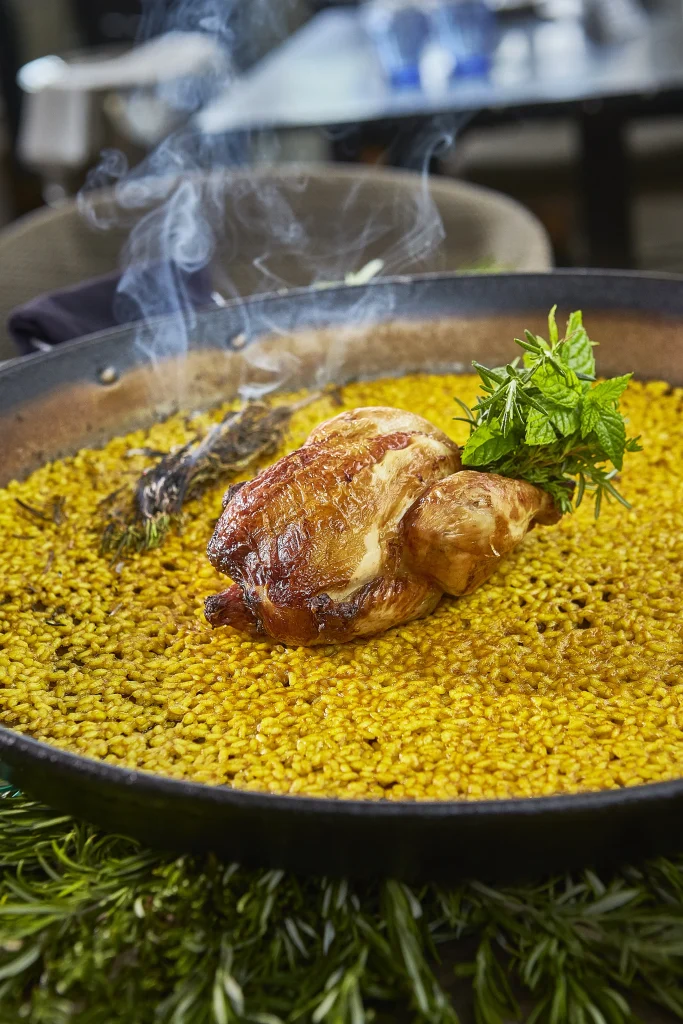
At Lobito de Mar, if you’re not ordering rice, you’re missing out. The Coquelet chicken rice is a classic, and the lobster one is simply unmissable. No need to complicate things. A good stock, perfect doneness and real seafood. That’s how summer should be enjoyed.

Cold soups with personality

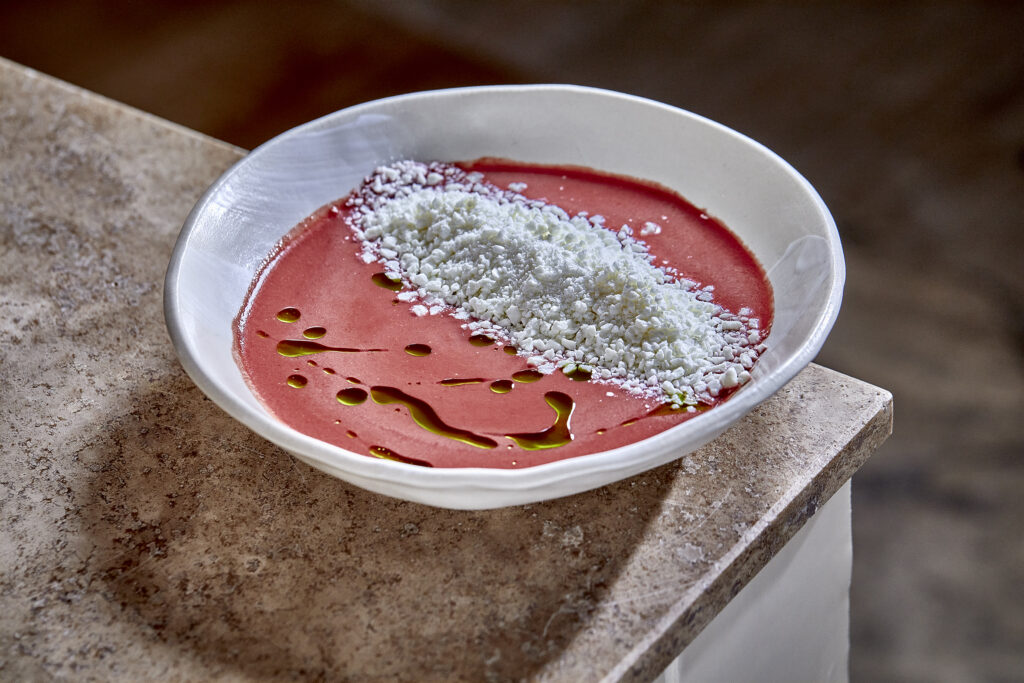
At Tragabuches, gazpacho isn’t red. It’s pink. The cherry version steals the show—cool, tangy, sweet, and finished with a drizzle of good olive oil. You can also go for the ever-reliable salmorejo. In summer, your body craves things like this. Cold soups, light and flavourful—textbook summer recipes packed with fruit, vegetables and freshness.

A sweet but light ending

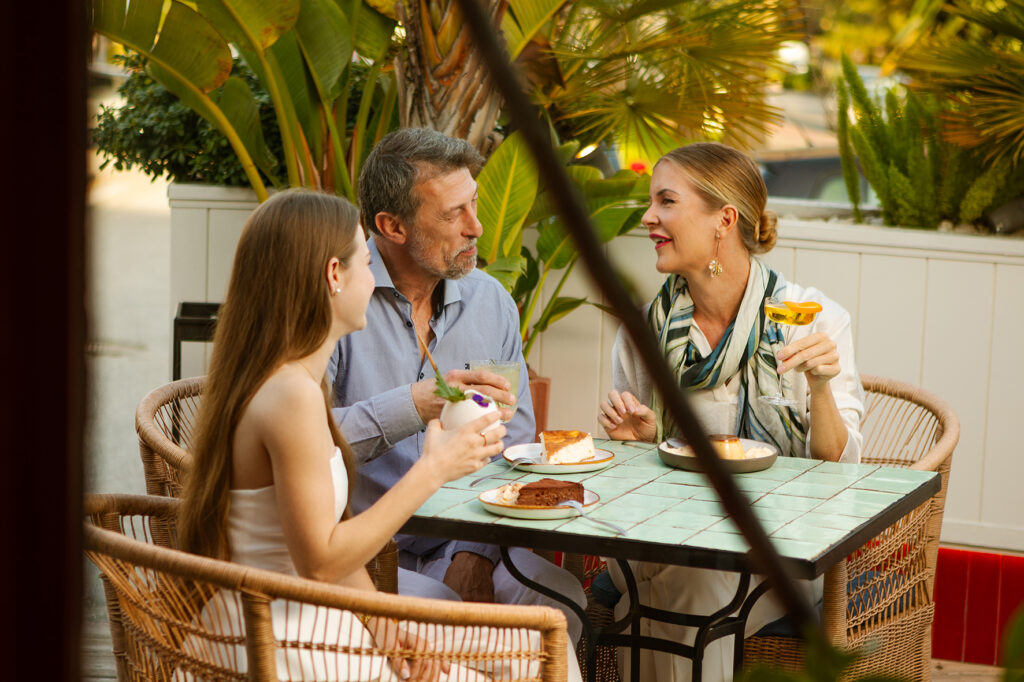
After so many delicious dishes, it’s time for something chilled. At Tragabuches, there are always desserts to slow things down without knocking you out. The cheesecake is a timeless favourite.

At BiBo, there’s the Marbella sun—a dessert full of orange blossom, Marcona almond purée and orange cream that takes you straight to an Andalusian garden. Or head to Lobito de Mar and try the iconic Happy Hippo—fresh, sweet and creamy. Just the right note to end on a smile. And at Leña, the Tarta di Rose with ice cream is the perfect match for the heat of the grill.

Because yes, even desserts have their summer version. Lighter, fresher and, above all, easier to enjoy.

San Juan is not just fire and wishes thrown into the sky. But let’s be honest—making wishes is nice, eating your favorite dish is better. Some write down what they want to let go of and burn it. In Grupo Dani Garcia, we prefer to grill whatever needs grilling. The important thing is gathering with your people, sharing some laughs, and making sure the table is full—of food, not problems.

Between grilled meats, seafood, cocas, and rice dishes, San Juan feels more like a feast than a ritual. If you’re in Marbella or Madrid, any of these restaurants is the perfect meeting point. If you’re in Barcelona, watch out: at Leña Barcelona, tradition is taken seriously. Try the coca de llardons and raise a glass of cava, just like the night calls for.

Fire, sea breeze, and a well-served Coca

San Juan night is the perfect excuse to light a bonfire—or a grill. At Leña, for instance, the fire is controlled, but the vibe is anything but. Steak doesn’t need a ritual, just appetite. And ribs have more power than any spell.

But if the sea is more your thing, you don’t need to hit the beach and jump waves. At Lobito de Mar, in both Marbella and Madrid, summer is served by the portion. With a ceviche that awakens even the deepest desires and a rice dish that’ll make you forget there’s no bonfire.

And if you’re celebrating in Barcelona, the perfectly crisp coca de llardons is served with a glass of cava that goes down easy. You might not make a wish out loud, but chances are you’ll be thinking, “I hope this never ends.”

Wishes you can taste

Making three wishes in front of the fire sounds lovely, but at Tragabuches, it’s more about ordering off-menu. Here, wishes are something you chew on. Something you mop up with bread. Something served in a clay pot.

Traditional cooking has a touch of magic—especially when it’s made with depth, time, and love. On San Juan, it’s perfectly fair to ask for a stew, a rice dish, or a classic ensaladilla and feel like you’re exactly where you’re meant to be. No fireworks—just great food and even better wine.

At BiBo, on the other hand, San Juan is all about music, cold drinks, and eating without overthinking. Brioche, freshly made guacamole, something Japanese, something Andalusian. There are no rules here. Just improvisation, bold flavors, and sharing. Which is also a way of wishing for something new.

No bonfire needed when the meal lasts all night

People get serious about San Juan. Midnight swims, no looking back, handwritten wishes on recycled paper. We think you don’t need all that. Just a good table, friends nearby, and a long, lingering meal that stretches into the night.

And if you’re wondering where to book, remember: Leña, Lobito de Mar, Tragabuches, and BiBo are more reliable than any ritual. In all of them, the most basic wish comes true: eating well and having a great time.

Sometimes, the fire is in the kitchen. The magic is in the first bite. And new beginnings? In a good glass of wine—or cava, if you’re in Barcelona.

So this June 23rd, don’t throw your wishes into the sea. Lay them out on the table. And celebrate San Juan the right way: no rush, no rules, and with a full stomach.

There are words that, when put together, guarantee Mediterranean happiness: Lobito de Mar, Madrid, arroz. And now, with the new “A toda vela” menu, that promise is fulfilled, dish by dish. A proposal designed for those who enjoy the flavors of the sea at the table, Monday to Friday at lunchtime, without complications but with a lot of taste. At Lobito de Mar Madrid, A toda vela surprises with a selection of starters, mains, and dessert that combine tradition, originality, and top-quality ingredients.

A high-flying start

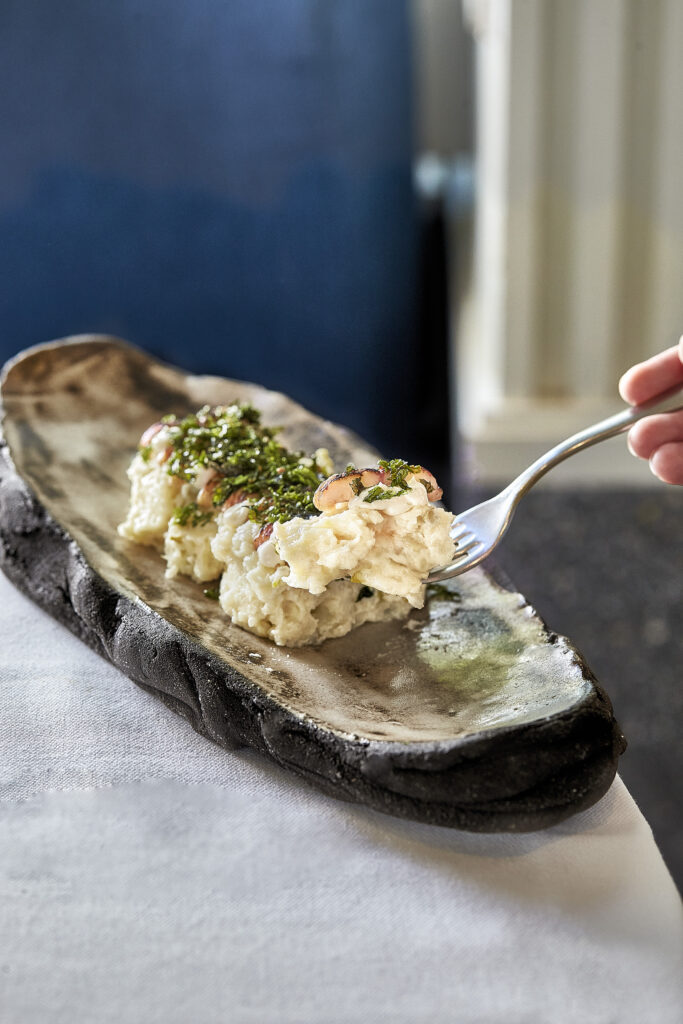
It all begins with a Russian salad topped with smoked eel. Yes, salad. But not just any salad. Creamy, flavorful, and with that smoky twist that changes everything. There’s barely time to blink—it’s gone before anyone can ask for seconds. Next up: a mix of croquettes, little flavor bombs where the classic and the marine come together. Then come the chirlas sautéed with manzanilla wine, the kind of dish that calls for bread and silence, with an aroma that speaks for itself. And to round things off, a baby tuna burger with lamb’s lettuce. Small, juicy, and perfectly balanced—clearly the result of a lot of testing to get it just right.

The decisive moment

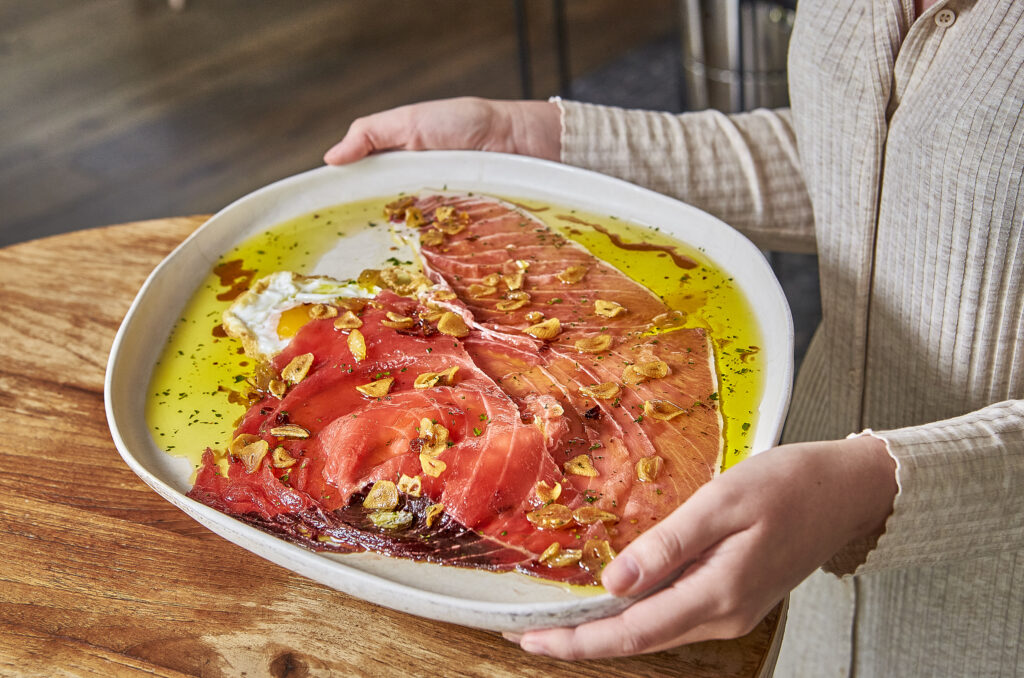
Now it’s time to choose. And it’s not easy. Four mains are battling for the spotlight. For fish lovers, there’s grilled sea bass loin, cooked to perfection with that crispy skin that crackles when you cut into it. Another option: tuna ribeye carpaccio with garlicky fried eggs. A surprising dish, full of texture, garlic aroma, and just the right amount of boldness to brighten your day. And of course, what can’t be missing from any equation involving Lobito de Mar, Madrid, arroz: the dry seafood and fish rice. Intense flavor, loose grains, and that deep, savory base that makes you close your eyes as you taste it.

A fourth contender steps up: arroz al sarmiento with coquelet chicken. That unmistakable smoky flavor you only get from real firewood, with tender, fall-apart chicken that’s full of flavor. The choice isn’t easy, but the result is always a win.

A glorious ending

And like any good menu, the ending lives up to the rest. A fresh cheesecake that puts the perfect finishing touch without overwhelming you. Light, creamy, and with that milky hint that brings back memories of the old-school kind—but with just the right touch to make you want to come back for it alone.

At Lobito de Mar Madrid, “A toda vela” is, at its core, a menu designed to bring the sea to your plate. For those who know that the best meals need no explanation—just good ingredients, a pleasant setting, and a team that understands soulful cooking. If one thing’s clear, it’s that with menus like this, satisfaction is guaranteed.

At Lobito de Mar in Marbella and Madrid, the tuna ribeye carpaccio is an unmissable experience. What makes it unique is its origin: a cut from the white loin of the tuna, specifically from the area between ribs 2, 3, 4, and 5. This section holds three prized and precise cuts: the descargamento, the tarantelo, and the ventresca. Together, they create a perfect balance of fat, texture, and flavor—a harmony that pays tribute to the most revered fish in the Atlantic. The ancient almadraba technique allows these specimens to be captured at their peak. Fishing is carried out with deep respect for the sea and its natural cycles. This is the only way to obtain a product that is fresh, seasonal, and of exceptional quality. This tuna carpaccio is no improvisation: it is carefully selected, refined, and honored. Its flavor connects sea and land, tradition and innovation, the present and memory.

Technique, Precision, and Respect

The tuna ribeye that reaches the table at Lobito de Mar is no coincidence. It comes from pieces selected with extreme meticulousness. Each tuna is caught using the almadraba method—a sustainable and regulated system still practiced along the coast of Cádiz. Thanks to the work of Gadira, the product retains its purity and properties. From each tuna, only the best is chosen: the descargamento brings firmness, the tarantelo offers juiciness, and the ventresca contributes a noble, soft, and unctuous fat. This combination turns the carpaccio into a refined and flavorful bite. In the hands of Dani García’s team, the tuna reaches a new dimension. Each slice is cut with millimetric precision—layer by layer—with technique and respect. The result is a light, clean, and characterful dish. A proposal where the product takes center stage, without unnecessary adornment. Because when you’re working with true tuna, nothing else is needed. Every detail is designed to highlight the marine essence of each bite.

A Marine Jewel in Two Cities

This tuna carpaccio is served in both Marbella and Madrid. At Lobito de Mar, the setting amplifies the experience: elegant, fresh, and with a seafaring soul. It’s not just about eating—it’s about living the Mediterranean through the plate. Behind each slice lies a story that begins in the southern sea, passes through the expert hands of Gadira, and ends in the kitchen of Dani García. A story of respect, quality, and commitment to authentic flavor. In Madrid, this tuna carpaccio brings the sea to the city in all its intensity. In Marbella, it’s savored with the gentle sound of waves in the background. Both cities offer a deeply marine experience: emotion, technique, and genuine flavor. This dish represents the connection between the age-old tradition of almadraba and Dani García’s contemporary vision.

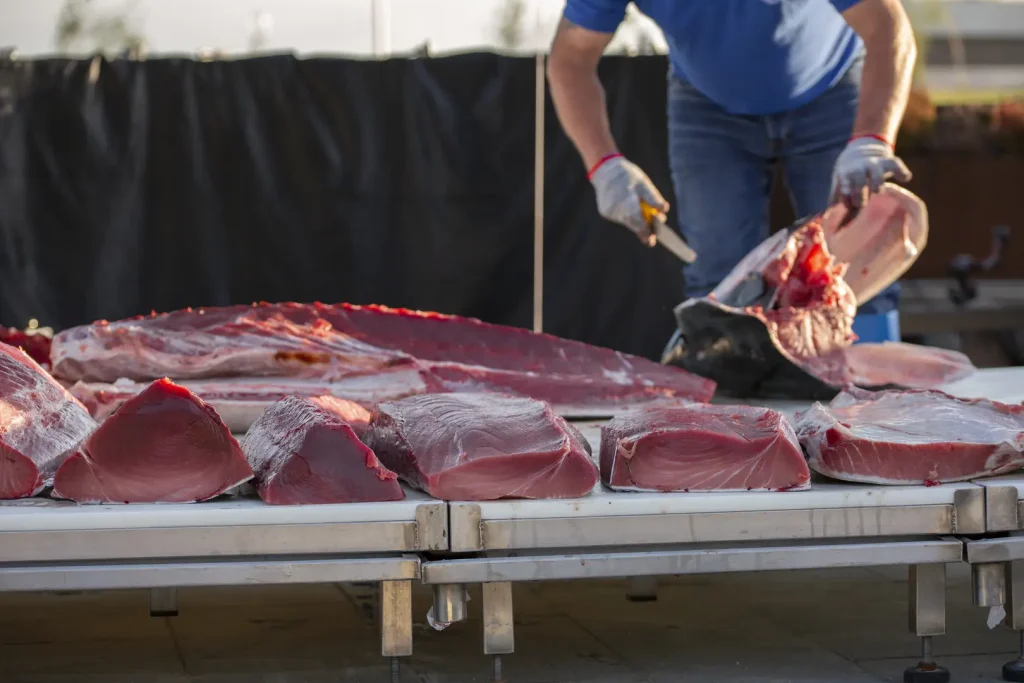
On May 13th, at Dani Brasserie in the Four Seasons Hotel Madrid, a very special event took place: the ronqueo of almadraba bluefin tuna. For those unfamiliar with the term, ronqueo is the traditional technique used to professionally cut and break down a tuna, extracting every usable part with care and respect. This demonstration brings people closer to the product, highlighting the importance of origin, quality, and technique behind a great tuna dish.

Almadraba bluefin tuna is one of the most prized ingredients in Spanish and Mediterranean cuisine. Almadrabais a traditional and sustainable fishing method used on the southern coasts of Spain to catch tuna. That’s why the arrival of an almadraba tuna at a restaurant like Dani Brasserie is such a significant event.

The ronqueo process, step by step

On the day of the event, the restaurant was set up to welcome a large tuna. Dani García, alongside the team from Gadira, guided attendees through every step of the ronqueo, from positioning the tuna to making the most delicate cuts. Ronqueo is not just about cutting; it’s about understanding the anatomy of the tuna to extract each piece in the best possible way.

During the demonstration, guests observed how the knife moved with precision to make clean, perfect cuts, wasting nothing. They learned that in a proper ronqueo, nothing goes to waste: lesser-known parts are used in stews, preserves, or broths, maintaining respect for the product and promoting sustainability.

The importance of ronqueo in gastronomy

Ronqueo is much more than a cutting technique; it’s an art form that is deeply rooted in Spanish culinary culture. Knowing how to properly break down a tuna allows chefs to make the most of every part and honor the quality of the product.

This event at Dani Brasserie showcased how knowledge and tradition come together to create outstanding dishes. Furthermore, the ronqueo technique is essential to preserving the flavor and texture of the tuna—key elements for both chefs and diners.

Events like this also bring people closer to real gastronomy, helping them understand what lies behind each dish and appreciate the work involved. Sustainability and respect for the product are becoming increasingly important, and ronqueo is a clear example of this.

Almadraba red tuna is one of the most prized treasures of the sea, and in the restaurants of chef Dani García, it is an essential ingredient, appreciated not only for its intense flavor but also for the unique properties that set it apart. One of those properties is collagen, a natural protein that plays a crucial role in the texture and juiciness of this fish. To ensure the highest quality, Dani García relies on Gadira, a supplier known for providing red tuna caught sustainably using the traditional almadraba technique.

The power of collagen in red tuna

Collagen is a structural protein found in the connective tissues of animals, including almadraba red tuna. This protein not only provides nutritional benefits but is also responsible for the juicy and firm texture that we so appreciate in this fish. However, to truly enjoy its juiciness, it is essential to cook tuna correctly. If cooked at too high a temperature, the collagen doesn’t have time to melt, which can leave the fish dry and chewy. To avoid this, it’s best to cook it slowly, allowing the collagen to melt and blend with the muscle fibers, creating a soft, juicy texture that melts in your mouth.

How to cook tuna to make the most of its collagen

To get the most out of the collagen in red tuna, it’s essential to follow certain cooking techniques. One option is tataki, a Japanese method that involves quickly searing the tuna at high heat and then cooling it, sealing the juices inside while maintaining a soft texture. Another approach is grilling, but always being careful not to overcook it so it doesn’t lose its natural juiciness. You can also opt for slow-cooked stews, where the collagen has time to fully melt, enhancing the flavor and texture of the dish. Gadira ensures that each piece of tuna retains these properties, guaranteeing an unparalleled culinary experience.

Benefits of red tuna collagen beyond flavor

In addition to enhancing texture, red tuna collagen also offers multiple health benefits. This protein is known for improving skin elasticity, strengthening joints, and promoting bone health. So, when you enjoy a plate of red tuna at Lobito de Mar, you’re not just savoring a marine delicacy, you’re also nourishing your body with essential nutrients.

Happy Mother’s Day always arrives with a promise: to celebrate her the way she deserves. In Marbella, there are many ways to do so, but few as memorable as eating well. Really well. Because if there’s one thing a mother knows how to do, it’s care. And if there’s one thing Dani García knows how to do, it’s elevating that care through gastronomy.

For those of us who grew up with a spoonful of broth in hand and a homemade croquette as a reward for a tough day, we know that some dishes are simply unforgettable. These are recipes with a name of their own. Sometimes it’s your mother’s. Sometimes your grandmother’s. And sometimes, it’s the name of a chef who understood that cooking is also about emotion.

This Mother’s Day, we wanted to go back to the origin—but with the flavor of today. At the tables of Tragabuches, traditional stews are reinterpreted with the reverence of someone who remembers. A rich broth, a spoonful of love, and the memory of those endless afternoon snacks that tasted like home. Dining in Marbella means coming home—without leaving the present.

Give the Gift of Mother’s Day

Not all mothers are the same, and neither should the plans be. Some love the grill. They’re bold, intense, full of flavor. For them, there’s Leña. Where fire becomes a spectacle and charcoal becomes art. A restaurant that understands instinct. That knows there are days when the best gift doesn’t come wrapped—it’s placed at the center of the table and shared in laughter, in glances that say everything without words.

Other mothers long for the sea. And not just any sea. I’m talking about the one that tastes like espeto, sea breeze, and a summer that starts early. For them, there’s Lobito de Mar, that seaside corner that smells like a beach bar but feels like a restaurant with soul. Where the fish arrive with a name and the rice dishes are served like a Sunday with family.

Tragabuches is more than a restaurant. It’s a stage where moments unfold, where mothers become the stars. Where gastronomy becomes a language of love and tradition. And this Sunday, all eyes should be on them.

Dani García understood it long ago: a mother doesn’t want a bouquet—she wants a memory. She doesn’t want just any gift—she wants an unforgettable moment. That’s why, in each of his brands, there’s a place for her. A table where everything tastes better, where every detail is designed to make her feel special.

Special memories

This Mother’s Day, don’t give things. Give moments—long, lingering lunches, comfortable silences, and dishes that awaken the memory. Give what can’t be bought but will always be remembered: time with her.

Because dining in Marbella or Madrid can be a gesture of love. It can be a declaration. It can be that “thank you for everything” we sometimes don’t say, but always feel. And if that gratitude comes in the form of a tartare, a glass of wine, a slow-burning grill or a dish that smells like childhood, then the gift is perfect.

Think of her favorite dish. Ask for that wine she likes. Order dessert even if you’re full. And take a photo—not for Instagram, but for the memory. Because memories, too, are served at the table. And because dining at Grupo Dani García this Mother’s Day is more than just sitting down to eat—it’s celebrating the story you share.

With the arrival of spring, the sea comes alive once again in the kitchen.
And that can only mean one thing: the tuna season at Lobito de Mar has begun.
A time that marks the culinary calendar in red ink, just like the prized loin of Almadraba bluefin tuna.

From April 23 to June 1, Lobito de Mar Madrid and Marbella become temples of ocean flavor.
Chef Dani García has created an exclusive menu focused on tuna, with dishes that pay tribute to this extraordinary product.

The menu features unique creations such as white loin ceviche and black loin chirashi sushi.
Also standing out are dishes like paprika-pickled tuna belly and Andalusian-style braised contramormo.
Tuna takes center stage, and every dish showcases its versatility and culinary power.

Ronqueos

In addition, Grupo Dani García has prepared two Almadraba wild bluefin tuna ronqueos in collaboration with Gadira. Gadira is a benchmark company known for its commitment to sustainable and selective fishing, respectful of the marine environment.
The first ronqueo will take place on May 9 at Tragabuches Marbella, in a day that blends sea, land, and tradition. That same day, there will also be a live demonstration of the Iberian pork butchery by Cinco Jotas, another gem of Spanish gastronomy.
Guests will enjoy a dinner featuring the finest cuts of both tuna and pork, ending with a perfectly chilled Cruzcampo beer.

The second ronqueo will be held on May 13 at Dani Brasserie, on the terrace of the Four Seasons Hotel Madrid.
With views over the Madrid skyline, this event offers a live look at the ancestral technique of tuna ronqueo.
A precise, almost hypnotic practice that honors the nobility of the Almadraba bluefin tuna.
A gastronomic performance that leaves no one indifferent, elevating this product to an almost artistic level.

The Art of Tuna

But if there’s one thing you shouldn’t miss this spring, it’s the tuna season at Lobito de Mar.
A unique proposal to enjoy tuna like never before, infused with the creative touch of Dani García.
Every dish has been crafted to move the diner and transport them to the purest Atlantic essence.
From raw and fresh bites to slow-cooked creations, tuna reveals itself in all its forms.

This new edition of “The Art of Tuna” is a celebration of the Andalusian coast, its flavors, and its roots.
It takes place in two cities, but with a single goal: to honor tuna and its legacy.
Each dish contains the sea, craftsmanship, and deep respect for a product that deserves it all.
A season that lasts just a few weeks but leaves a lasting impression on those who live it.

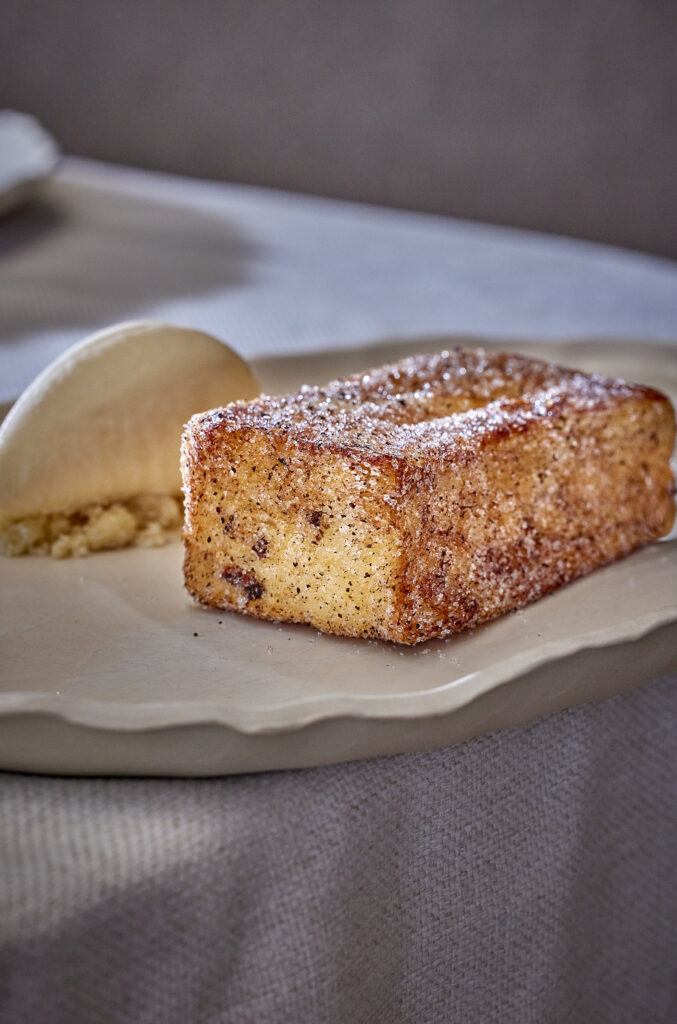
If you’re wondering what to eat during Semana Santa and are looking for flavors with an Andalusian soul, the torrijas at Tragabuches are the perfect answer. During this season, when devotion fills the streets and every table, the restaurant brings back that childhood taste and dresses it with the elegance that defines Grupo Dani García.

The torrijas at Tragabuches are more than just a dessert—they are an experience. An emotional journey that connects with childhood, with the south, and with cuisine that speaks of its roots. At Semana Santa, when the body seeks reflection and the soul looks for comfort in familiar flavors, this sweet becomes a warm embrace. And if this year you’re wondering where to find torrijas that truly move you, join us and discover them.

WHERE TO EAT TORRIJAS IN MADRID

In the capital, the recipe takes on a cosmopolitan twist. If you’re looking for a place to eat torrijas in Madrid—or more specifically, where to find the best torrijas in Madrid—Tragabuches Madrid is the perfect spot. It preserves the essence of the traditional dessert while playing with presentation and contrasts. Here, our torrijas in Madrid are served with a light vanilla cream and artisanal leche merengada ice cream, adding a fresh and contemporary touch.

Even in the heart of the Salamanca neighborhood, there’s room to savor tradition with a sophisticated twist. Whether you’re seeking that “sweetest Tragabuches” amid the urban buzz or an unforgettable post-meal experience, the elegance of Madrid makes this classic truly shine.

WHERE TO EAT TORRIJAS IN MARBELLA

In Málaga, Semana Santa is celebrated with a special intensity. The processions, the incense, the saetas… and, of course, the torrijas. This beloved dessert, humble in origin yet full of nuance, is brought to life with a recipe that honors tradition while elevating it to a gourmet level. If you’re wondering where to eat torrijas in the south, at Tragabuches Marbella the chef pays tribute to Andalusian roots with a version that is rich, aromatic, and utterly irresistible.

Enjoying torrijas in Marbella means understanding that the secret lies in the bread—not just any bread will do. It’s made with a crumb that is both dense and soft, perfect for absorbing the infused milk—a blend of cinnamon sticks, lemon peel, sugar, and a hint of vanilla. The bread rests in this mixture for hours, soaking up all the flavors before being dipped in egg and gently pan-fried. The result: a tender, juicy torrija that melts in your mouth, taking you bite by bite back to Semana Santa at your grandmother’s table.

In Málaga, where Semana Santa is part of the cultural DNA, there’s a palpable connection between the spiritual and the culinary. Torrijas, originally created to make use of stale bread during Lent, here become a celebration of resourceful cooking and pure, unadulterated flavor. With the southern light and the sea just steps away, the feeling is unmistakable: you’re at home.

What to eat during Semana Santa? There are many answers, but none as sweet and comforting as a perfectly made torrija. It’s that pause after a great meal—the perfect ending to a family table.

It’s no coincidence that both restaurants feature this dessert during this season. Because when it comes to identity, roots, and emotion, few things are as powerful as a torrija. At Semana Santa, Tragabuches invites you to savor tradition with the signature touch of Dani García: respect for the product, flawless technique, and a sensitivity that goes beyond the plate.

The New cocktail menu at Tragabuches: A tribute to the essence of Andalucía

The new cocktail menu at Tragabuches, both in Marbella and Madrid, is a tribute to the essence of Andalusia. With the unmistakable signature of the Dani García universe, each creation blends tradition and creativity in perfect harmony.

The influence of fortified wines sets this cocktail selection apart. The versatility of Fino, Amontillado, and Pedro Ximénez adds deep and elegant nuances. From the Adonis PX, featuring Amontillado, red vermouth, and a touch of orange bitters, to the Fino Martini, where Fino and dry gin come together in an Andalusian take on the iconic classic.

The essence of sherry in every glass

Cocktails at Tragabuches offer a true sensory experience. The De Jerez a Manhattan reinterprets the American classic with a touch of Oloroso and cocoa bitters, while the Papirusa Martínez fuses Papirusa Fino with cherry liqueur and rosé vermouth. Sophisticated choices that elevate the art of mixology.

For those looking for a more refreshing combination, the Bamboo & Jarana blends Jarana Fino with bitter almond and orange liqueur, achieving the perfect balance between sweetness and bitterness.

Afterwork & long drinks: the casual side of Tragabuches

Enjoying an afterwork drink with the new cocktail menu at Tragabuches is an experience in itself. The selection includes options that combine bold flavors with a nod to Andalusian tradition.

The G & Ginger is a vibrant choice featuring aged rum, Oloroso, and Amontillado, while the Sherry Daiquiri reinvents the classic with Pedro Ximénez. Meanwhile, the Generoso Old Fashioned brings character with a blend of fortified wines and bourbon.

If you’re looking for a refreshing option with an innovative twist, the Rebu-Jito combines gin and Palo Cortado with the essence of a mojito. And for spiced cocktail lovers, Punta Paloma fuses aged rum with Tempranillo, rosé vermouth, and a hint of Tajín.

Alcohol-free cocktails: The 0.0 option

Non-alcoholic mixology also has its place in the new Tragabuches menu. Rojo Vibrante is a sophisticated choice with 0.0 gin, almond, and vanilla, while Paloma Floral features notes of peach, orange blossom, and a touch of Tajín.

Cocktail making: A journey through Andalucía

Tragabuches has turned its new cocktail menu into a tribute to Andalucía. Each combination is designed to highlight the richness of fortified wines and other ingredients that evoke the south of Spain.

If you’re looking for a liquid experience that blends elegance, tradition, and creativity, the new cocktail selection at Tragabuches is a must-try.

Subscribe

By subscribing to this email you will live the GDG experience beyond the table.