Tragabuches | Grupo Dani Garcia

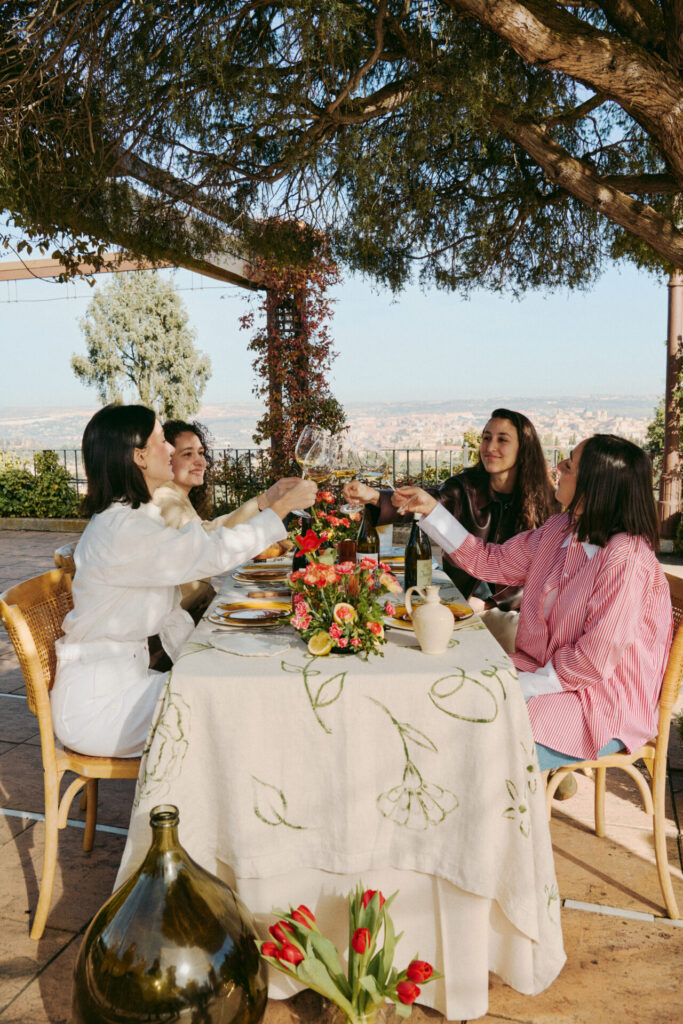
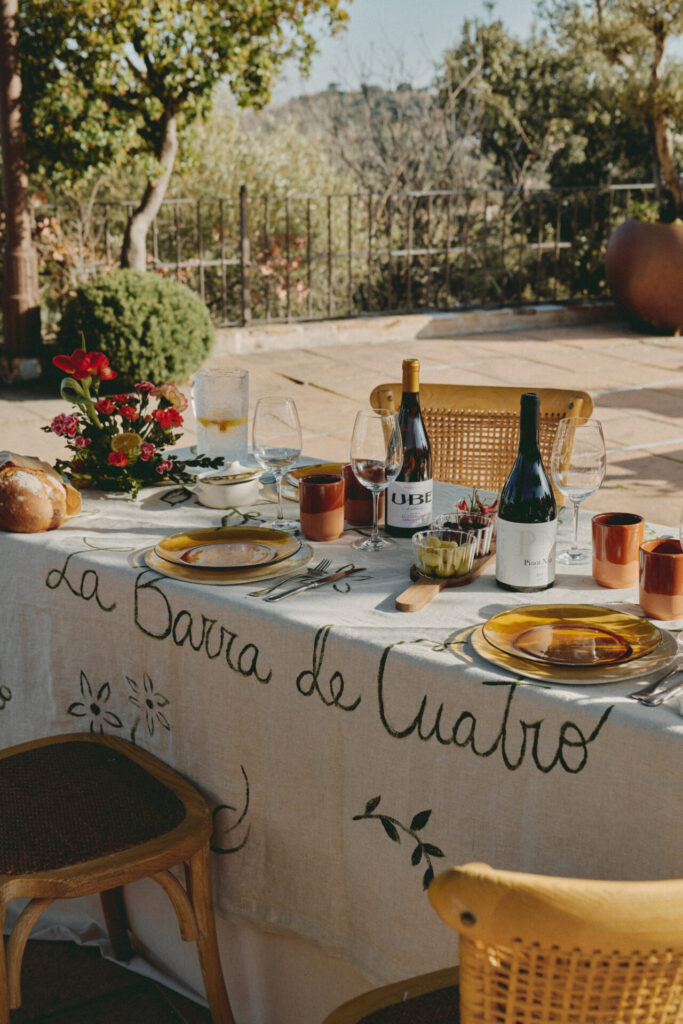
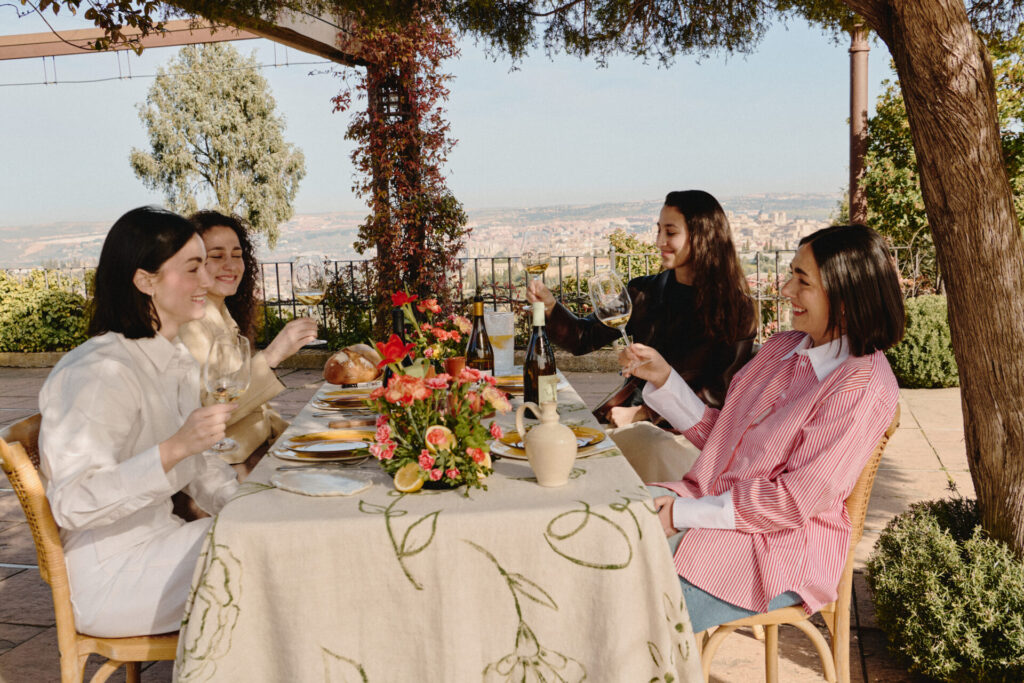
“La Barra de Cuatro,” the new gastronomic proposal from Tragabuches — a benchmark of haute cuisine from Málaga — pays tribute to tuna as an essential product of its identity. The gathering will bring together at its bar the content creators Nieves Felipo, Paula Casado, and Marta Iglesias, along with winemaker Esther Iglesias, with a common thread: tuna as the star of this special edition. Starting March 12 in Madrid and March 13 in Marbella, the experience will open to the public in a bar format, inviting guests to discover this proposal firsthand.

In an intimate and approachable format, the bar becomes both the stage and meeting point, allowing guests to experience everything from the front row. Each course is presented while revealing the inspiration behind the dish and the work with the product through different formats, textures, and flavors, guided by the Tragabuches kitchen team. The proposal is completed with a pairing specifically designed to accompany each preparation, creating a sensory journey where gastronomy and wine engage in a balanced dialogue.

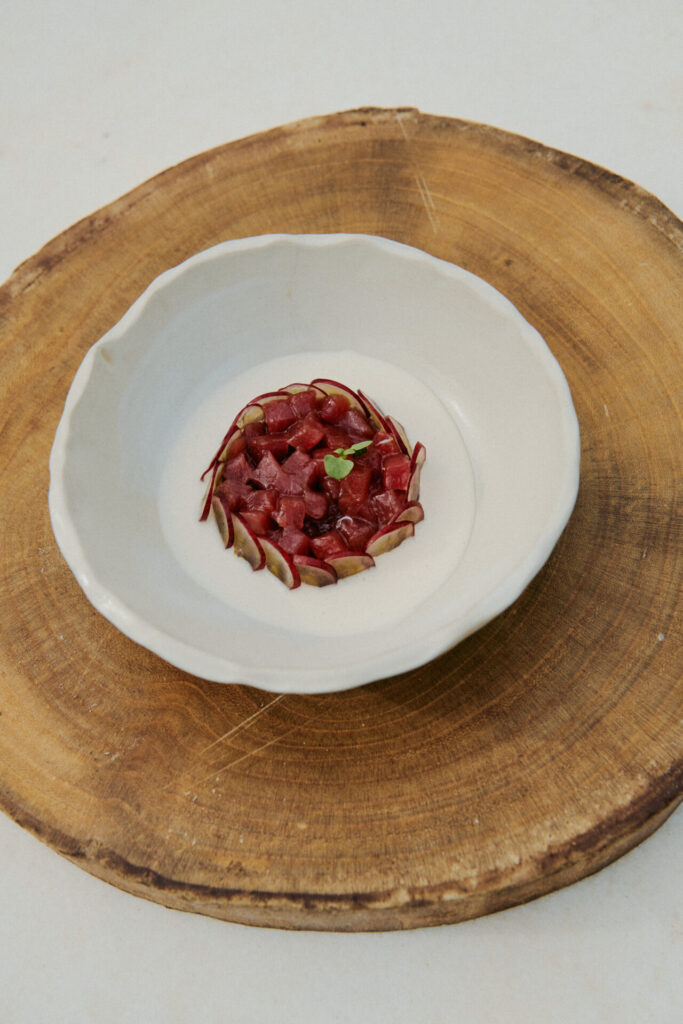
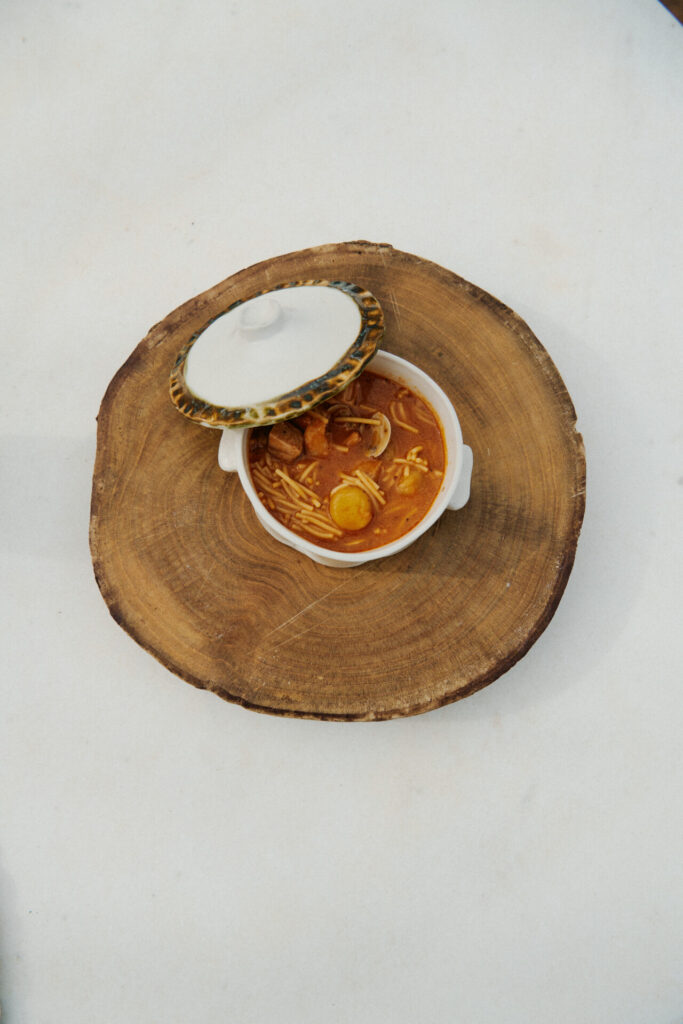
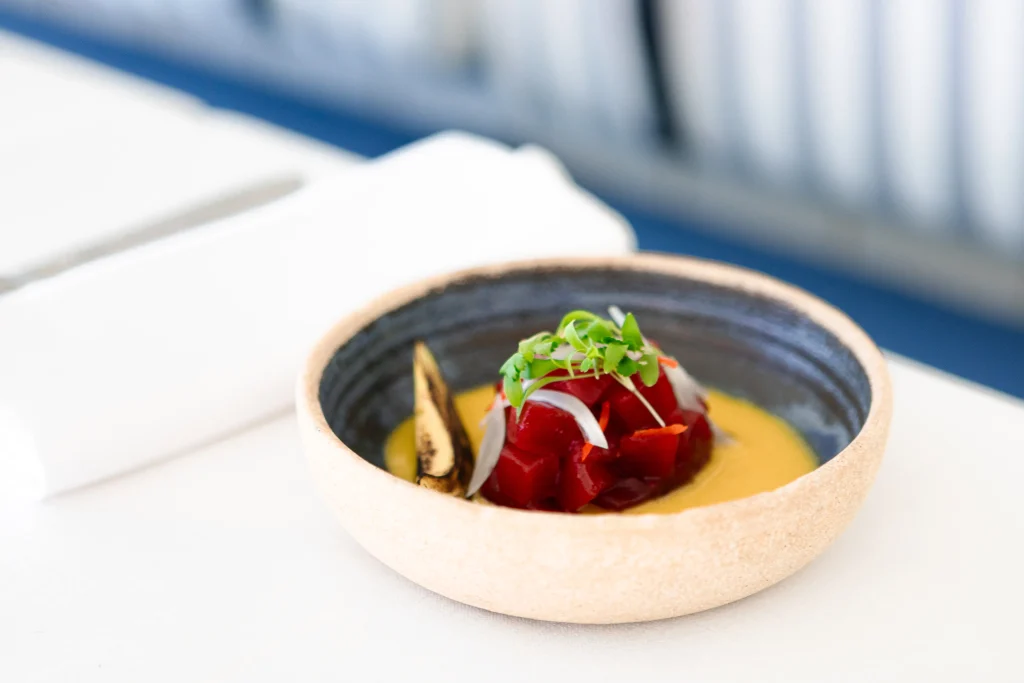
The menu begins with an XL tuna gilda with octopus and citrus picada, a joint creation by Nieves Felipo and Paula Casado. It is a contemporary reinterpretation of the classic, combining raw tuna, tender octopus, piparras, olives, and a citrus touch that adds freshness. Nieves Felipo also presents a descargamento tuna tartare with Moscatel grapes and Marcona almond ajo blanco, a cold, clean, and elegant dish that highlights the purity of the cut and the balance between sweetness, acidity, and creaminess. Meanwhile, Paula Casado proposes a Malaga-style casserole enriched with oloroso, where the more gelatinous cuts of tuna are integrated into a marine-based broth with a rich, comforting texture.

The pairing, designed by sisters Marta and Esther Iglesias, accompanies the journey with a carefully selected range intended to enhance the product and bring coherence to the whole, where the wines act as the sauce of the dishes. The experience begins with an XL Gilda that tastes of the sea, accompanied by the salinity and striking minerality of Cota 45 Ube Miraflores 2024. This Palomino Fino by Ramiro Ibáñez transports you directly to the chalky albarizasoils of Cádiz, enhancing the almadraba tuna with whispers of yeast and notes of dried fruits.

The journey continues eastward, seeking balance between the strength of the descargamento tartare and the vibrant acidity of Oremus Mandolás Furmint 2023, the most distant project of TEMPOS Vega Sicilia. It is the freshness of Tokaj cutting through the richness, a dance of green apple and citrus that maintains tension on the palate.

We arrive at port with a tribute to surprise and to the terroir of Málaga. A return to local roots with a Malaga-style casserole, for which Marta and Esther Iglesias have selected a red wine that defies expectations: Pinot Noir 2024 from Cortijo Los Aguilares. Grown at high altitude, this grape offers one of the most surprising and fresh interpretations of warm climates. It is a wine of delicacy almost unexpected in southern Spain—light, elegant, and deeply aromatic. An elegant, floral, and profound red that brings vibrant depth to the stew, enveloping the strength of the casserole without taking away an ounce of its protagonism. Under the guidance of the Iglesias sisters, origin is always the final destination.

With “La Barra de Cuatro,” Tragabuches reinforces its commitment to quality ingredients and female talent, offering an experience where tradition is reinterpreted through a contemporary lens, centered on the ingredient that defines its identity. This is a special occasion to discover tuna, available at both Tragabuches Marbella and Tragabuches Madrid, at the bar area with no prior reservation required, designed to bring the experience closer to the public in an approachable and direct way.

Menu available at the bar only until May 17.

Marbella – Monday to Friday for lunch and dinner; Sunday dinner.
Madrid – Wednesday to Friday for lunch and dinner; Sunday dinner.

Andalusia Day falls on a Saturday this year, and Tragabuches opens early to celebrate with a breakfast that is more than food: it’s a tribute.
Starting the day here means enjoying a slow morning, letting the aromas of fresh bread, olive oil, and freshly brewed coffee invite you to linger a little longer.

A breakfast that has it all

The Andalusian breakfast at Tragabuches is pure temptation.
From toast with tomato, olive oil, and Iberian ham to the classic mollete with lard and ham.
Extra virgin olive oil shines in every bite, and artisanal cold cuts bring authentic flavour from the region.
Everything is served with seasonal products and care that makes each detail count.

To accompany every flavour

A breakfast like this calls for a perfect drink: quality coffee, fresh juices, and a touch of tradition with thick, comforting hot chocolate.
At Tragabuches, breakfast is not just about filling your stomach, it’s about celebrating the small rituals that make Andalusia feel close, even in the heart of Madrid.

An experience that invites you to stay

Sitting down to enjoy this Andalusian breakfast is letting yourself be carried away.
Slow conversations, laughter, and shared glances accompany each dish.
It’s a moment to savour without hurry, to start Saturday with energy and joy, and to celebrate the culture and gastronomy of our land.

Celebrate Andalusia Day with us

This Saturday, Tragabuches invites you to experience the essence of Andalusia from the very first bite.
A breakfast designed for those who love to eat well, enjoy morning rituals, and seek a special plan that combines tradition and flavour.

Because Andalusia Day at Tragabuches is not just a breakfast, it’s a memory that begins from the aroma of coffee to the last crumb of bread.

You don’t need to cross a locked door to come home. Sometimes, all it takes is an aroma, a flavor, a table that welcomes you without questions. At Tragabuches, every dish holds a touch of refuge, of roots, of embrace. There’s no artifice. Just ingredients, Andalusian soul, and cooking that stirs emotion. Because yes, dining at Tragabuches is coming home, even if it’s your first time walking in.

Roots served on a plate

The story of Tragabuches cannot be told without speaking of its origin—of that first restaurant that marked the beginning of the Dani García universe, and of this new version which is less of a return and more of a statement of principles. Here, cooking is done with truth. With ingredients that speak Andalusian, with times that respect the nature of the product, and with one clear intention: to reconnect. From the bread to the last bite of dessert, dining at Tragabuches is coming home—because everything tastes essential.

Product, flavor, and emotion

There are dishes that need no explanation. That arrive at the table with a universal language: the language of flavor that moves you. At Tragabuches, seasonal produce is everything. Vegetables that still carry the shine of the earth, fresh fish, noble meats… each treated with care, with respect, with intention. You don’t come here to test technique—you come here to feel. And in every dish, there’s something that reminds you of yourself.

The table as a meeting place

Dining at Tragabuches is not just a gastronomic experience—it’s a feeling. That of being in a place where everything makes sense. Where there’s no need to speak loudly, nor dress up. Where you sit down, take a deep breath, and think: this is it. That’s why dining at Tragabuches is coming home. Because it’s the kind of place you don’t just go to—you return to. Again and again.

At Tragabuches, we’re about to take a new turn. An elegant one, deeply Andalusian and with the flavor of the land. Tradition, KM0 and Andalusian flavor: this is how Tragabuches reinvents itself.

Starting July 9 in Marbella and July 16 in Madrid, we’re saying goodbye (just a little) to the traditional menu. But Andalucía, local ingredients and soulful recipes remain the true stars.

A journey back to our roots, without leaving the table

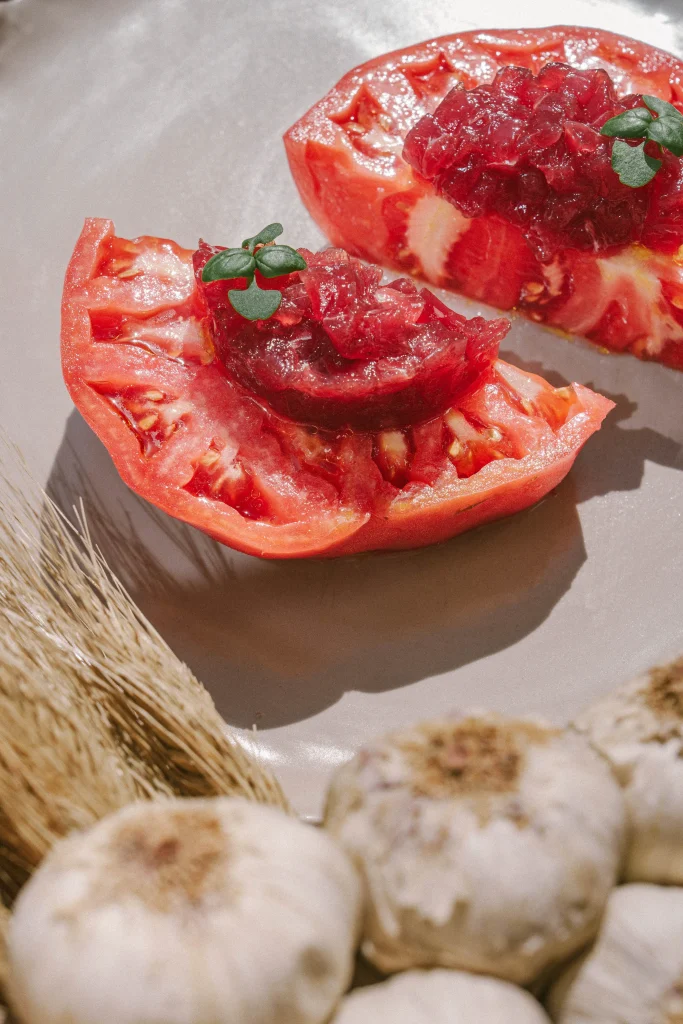
Tragabuches was born to pay tribute to who we are. To the olive oil that tastes like sunshine. To the tomatoes that smell like garden. And to the stew that begins with a slow-cooked sofrito. Because luxury lies in simplicity. In freshly baked bread. In cold gazpacho that tastes like childhood. And in that stew that smells like grandma’s kitchen.

So, who was Tragabuches?

For those who don’t know, Tragabuches isn’t just a name with flair. He was a bandolero. A true man of the mountains. A bullfighter, a flamenco singer, and a fugitive. Legend has it he killed for love, fled for passion, and lived singing along the roads. A legendary figure. Andalusian through and through. And if there’s something about him that inspires us, it’s not the crimes. It’s the authenticity. The freedom. The way he lived without asking permission. That’s how we cook here. Tragabuches is not just another restaurant. It’s a living tribute to Andalucía. To its history, its land and its way of gathering around the table.

The blackboard of the day: fresh, light, and with a southern soul

At Tragabuches, summer is written in chalk. And it tastes like the sea. Every day, our menu is refreshed with light, vibrant and flavorful dishes. No heavy meals or endless stews. Here, you come to eat well without sacrificing that summer feeling. With recipes that cool you down and ingredients straight from the port or the farm. The blackboard sets the rhythm. It changes depending on what the market offers, on what shines brightest at the fish market that morning. Because if there’s one thing we love at Tragabuches, it’s cooking what’s in season, when it’s at its best. And always with that subtle Andalusian touch. Light, but full of soul. Tragabuches reinvents itself through simplicity. Through product. Through tradition. KM0 and Andalusian flavor, served with elegance and a smile.

Fine dining with a backyard soul

Our guests are demanding. They appreciate great food. But they also seek authenticity. And that’s exactly what we serve. This new chapter isn’t any less sophisticated. Quite the opposite. It’s a luxury that doesn’t need to show off. A kind of elegance that comes from the land. Because that’s what Tragabuches has always been: a place where tradition is dressed in something new. But always with its Andalusian accent intact.

Andalucía, one bite at a time

This new concept is, above all, a love letter. To our land. To its flavors. And to the people who grow, fish, and create them. Every bite carries a piece of Andalucía. Every dish tells a story. And every day, that story changes just a little. Because tradition, KM0 and Andalusian flavor: this is how Tragabuches reinvents itself.

El pasado 9 de mayo, Tragabuches Marbella se convirtió en el epicentro de la tradición gastronómica andaluza al acoger un evento que combinó dos de las técnicas más ancestrales de la cocina: el ronqueo de atún y el despiece de cerdo. Este evento no solo rindió homenaje a dos pilares fundamentales de la cocina mediterránea, sino que también acercó a los asistentes a la esencia de la cocina andaluza, donde cada corte y cada pieza cuentan una historia cargada de sabor y tradición.

El arte del ronqueo

De la mano de Gadira, el ronqueo del atún es una práctica que se ha perfeccionado durante siglos en las costas de Andalucía, especialmente en las almadrabas del sur. Esta técnica, que debe su nombre al sonido que produce el cuchillo al rozar la espina del atún, es todo un ritual que requiere precisión y destreza. Durante el evento, los asistentes pudieron presenciar cómo se despieza un atún de gran tamaño, siguiendo los pasos tradicionales que comienzan con la separación de la cabeza y continúan con cortes precisos para extraer las partes más nobles del pez, como el descargamento, el tarantelo, la ventresca y el lomo negro. Cada corte tiene su propio carácter y destino en la cocina, y es precisamente esta diversidad lo que convierte al atún en una joya gastronómica.

Además de ser una experiencia visual impresionante, el ronqueo es también una lección sobre sostenibilidad y aprovechamiento. Nada se desperdicia; cada parte del atún encuentra su lugar en la cocina. Es un recordatorio de cómo la gastronomía puede ser tanto arte como responsabilidad, reflejando el profundo respeto de los pescadores andaluces por el mar que les nutre.

El despiece del cerdo

Pero no solo el mar fue protagonista esa noche en Tragabuches Marbella. El despiece del cerdo de la mano de Cinco Jotas, una tradición profundamente arraigada en la cultura rural andaluza, también capturó la atención de los comensales. Este proceso es igual de meticuloso y respetuoso que el ronqueo, y su importancia en la cultura culinaria española es innegable. Desde los cortes más conocidos como el solomillo, el secreto y la presa, hasta partes menos populares pero igualmente sabrosas como la carrillada o el lagarto, cada pieza del cerdo tiene un propósito en la cocina y un lugar en las recetas tradicionales.

El despiece del cerdo es un arte que requiere conocimiento profundo de la anatomía del animal y una habilidad excepcional para aprovechar cada parte al máximo. Al igual que en el ronqueo, aquí también se valora el respeto por el producto y la tradición. Los asistentes pudieron aprender sobre los usos de cada corte y cómo cada parte del cerdo puede transformarse en platos únicos, desde embutidos artesanales hasta asados que se derriten en la boca.

Una experiencia gastronómica completa

Este evento en Tragabuches Marbella fue más que una simple exhibición de técnicas de corte. Fue una inmersión en la cultura gastronómica , donde el respeto por los ingredientes y la conexión con las raíces se sintieron en cada movimiento del cuchillo. Además, los chefs presentes aprovecharon la ocasión para crear platos únicos, combinando los sabores intensos del atún de almadraba con la robustez del cerdo ibérico, creando así una sinfonía de texturas y sabores que rindió homenaje a ambos animales.

Para muchos de los asistentes, esta fue una oportunidad única para comprender el verdadero significado del respeto al producto, la importancia del origen y la magia de transformar ingredientes en experiencias inolvidables. En un mundo cada vez más desconectado de sus raíces culinarias, eventos como este en Tragabuches Marbella son esenciales para mantener viva la tradición y recordar que, en la cocina, cada corte cuenta una historia y cada plato es un reflejo de la cultura que lo crea.

With the arrival of spring, the sea comes alive once again in the kitchen.
And that can only mean one thing: the tuna season at Lobito de Mar has begun.
A time that marks the culinary calendar in red ink, just like the prized loin of Almadraba bluefin tuna.

From April 23 to June 1, Lobito de Mar Madrid and Marbella become temples of ocean flavor.
Chef Dani García has created an exclusive menu focused on tuna, with dishes that pay tribute to this extraordinary product.

The menu features unique creations such as white loin ceviche and black loin chirashi sushi.
Also standing out are dishes like paprika-pickled tuna belly and Andalusian-style braised contramormo.
Tuna takes center stage, and every dish showcases its versatility and culinary power.

Ronqueos

In addition, Grupo Dani García has prepared two Almadraba wild bluefin tuna ronqueos in collaboration with Gadira. Gadira is a benchmark company known for its commitment to sustainable and selective fishing, respectful of the marine environment.
The first ronqueo will take place on May 9 at Tragabuches Marbella, in a day that blends sea, land, and tradition. That same day, there will also be a live demonstration of the Iberian pork butchery by Cinco Jotas, another gem of Spanish gastronomy.
Guests will enjoy a dinner featuring the finest cuts of both tuna and pork, ending with a perfectly chilled Cruzcampo beer.

The second ronqueo will be held on May 13 at Dani Brasserie, on the terrace of the Four Seasons Hotel Madrid.
With views over the Madrid skyline, this event offers a live look at the ancestral technique of tuna ronqueo.
A precise, almost hypnotic practice that honors the nobility of the Almadraba bluefin tuna.
A gastronomic performance that leaves no one indifferent, elevating this product to an almost artistic level.

The Art of Tuna

But if there’s one thing you shouldn’t miss this spring, it’s the tuna season at Lobito de Mar.
A unique proposal to enjoy tuna like never before, infused with the creative touch of Dani García.
Every dish has been crafted to move the diner and transport them to the purest Atlantic essence.
From raw and fresh bites to slow-cooked creations, tuna reveals itself in all its forms.

This new edition of “The Art of Tuna” is a celebration of the Andalusian coast, its flavors, and its roots.
It takes place in two cities, but with a single goal: to honor tuna and its legacy.
Each dish contains the sea, craftsmanship, and deep respect for a product that deserves it all.
A season that lasts just a few weeks but leaves a lasting impression on those who live it.

If you’re wondering what to eat during Holy Week and you’re craving Andalusian soul food, the torrijas at Tragabuches are the perfect answer.Whether you’re in Tragabuches Marbella or its Madrid counterpart, this classic of Spanish pastry becomes a bite of both tradition and innovation. During this time of year, when devotion is felt in the streets and at every table, the restaurant brings back that childhood flavor and dresses it up with the elegance that defines Grupo Dani García.

In Málaga, Holy Week is experienced with a special intensity. The processions, the incense, the saetas… and of course, the torrijas. This humble yet flavorful dessert comes back to life at Tragabuches with a recipe that respects tradition while elevating it to gourmet status. In Marbella, the chef pays tribute to Andalusian roots with a version that’s soft, aromatic, and absolutely irresistible.

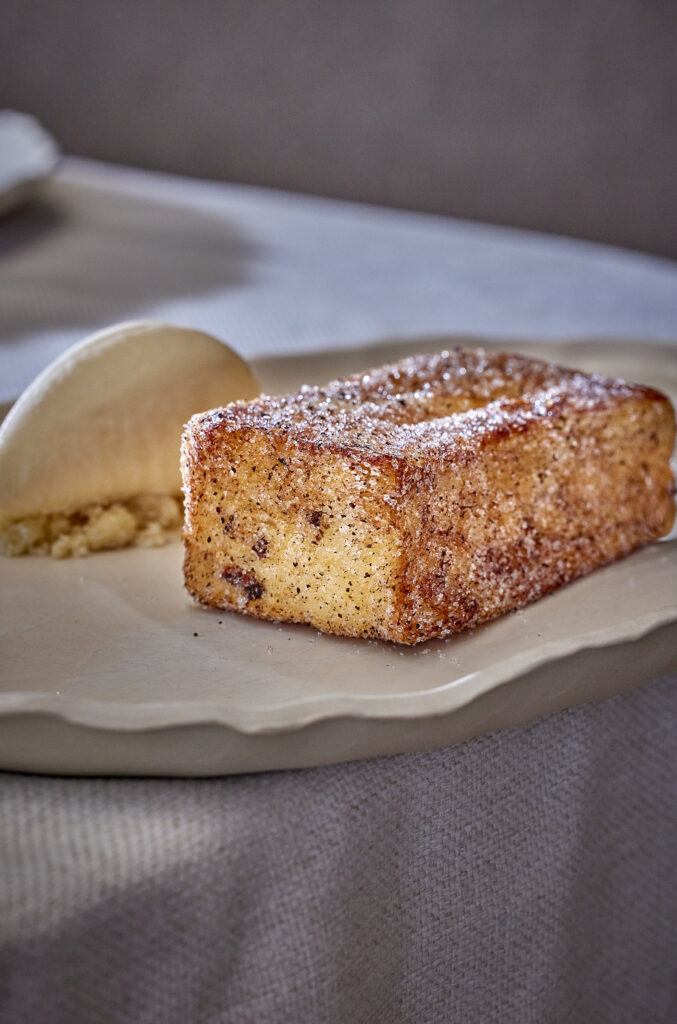
The secret lies in the bread—no ordinary loaf. It’s made with a dense yet tender crumb, ideal for soaking up the infused milk, which is flavored with cinnamon sticks, lemon peel, sugar, and a touch of vanilla. The bread rests in this aromatic bath for hours, soaking in all the flavor before being dipped in egg and gently fried to golden perfection. The result: a torrija that’s tender and juicy, one that melts in your mouth and takes you, bite by bite, back to Easter at your grandmother’s house.

In Tragabuches Madrid, the recipe gets a cosmopolitan twist. While it stays true to its roots, the plating and contrasts add a contemporary touch. Here, the torrija is served with a light vanilla cream and artisanal leche merengada ice cream, bringing freshness and sophistication to every spoonful. Because even in the heart of the Salamanca district, there’s room to savor tradition with a refined edge.

The sweetest Tragabuches

The torrijas at Tragabuches are more than just a dessert—they’re an experience. An emotional journey that connects you to your childhood, to the South, to a kind of cooking that speaks of roots. During Holy Week, when the soul seeks comfort in familiar flavors, this sweet treat becomes a warm embrace. Whether you’re in Marbella, with the sea just steps away, or in Madrid, amid the urban hustle, the feeling is the same: you’re home.

But what truly sets Tragabuches apart is its way of reinterpreting the familiar as something new. In Málaga, where Holy Week is part of the region’s cultural DNA, you can feel that deep connection between spirituality and gastronomy. Born as a way to make use of stale bread during Lent, the torrija here becomes a declaration of love for traditional, no-frills cooking.

What to eat during Holy Week? There are many answers to that question, but none as sweet or comforting as a well-made torrija. It’s that moment of pause after a good meal—the perfect finale to a family gathering. At Tragabuches, the setting enhances the experience. The southern light in Marbella, the urban elegance of Madrid… everything comes together to let this classic shine with its own light.

And it’s no coincidence that both restaurants—Marbella and Madrid—celebrate this dessert at this time of year. Because when it comes to identity, roots, and emotion, few things are as powerful as a torrija. This Holy Week, Tragabuches invites you to savor tradition with the unmistakable Dani García touch: respect for the product, flawless technique, and a sensitivity that goes beyond the plate.

There are moments when Marbella becomes pure magic. When the scent of incense fills the air, the city beats to the rhythm of drums, and the coast lights up, we know Holy Week has arrived. In Marbella, Holy Week, plans, and the art of good eating blend together as naturally as a sunny afternoon. This year, tradition and gastronomy go hand in hand in our spaces, where every corner invites you to savour the true essence of Málaga.

In Marbella, Holy Week is culture, gastronomy, and landscape. It’s that perfect plan that begins with coffee in the sun, continues with a rice dish by the sea, passes through a procession on Calle Ancha, and ends with a cocktail in good company. That’s why this year, the best Holy Week plans are right here. No need to leave the city, no need to compromise on flavour—just pure emotion, wrapped in everything Málaga has to offer during these special days.

From the purest tradition to innovation at the table, our brands are ready to accompany you. Because every procession deserves a pause, and every emotion, a bite. In Marbella, memories are meant to be tasted.

Enjoy in Marbella

At Tragabuches Marbella, Holy Week is lived with nostalgia—and with a spoon. In the heart of the city, as the processions wind through the streets and the murmur of the crowd turns into emotion, our restaurant becomes a haven. Dining in Marbella here takes on a new meaning: it’s an homage to the timeless cuisine that smells like home. “Andalucía en la mesa” captures the soul of each traditional stew and turns it into a ritual. Perfect for those looking to pause between processions, without missing out on the flavour of authenticity.

And if you choose to escape the bustle and follow the Atlantic breeze, BiBo Tarifa awaits with the soul of the free-spirited South. Its laid-back, worldly, and colourful cuisine nods to those who see Holy Week as a celebration on the move. Here, plans mix with cocktails that taste like early summer. If you’re after something different this Holy Week, head to Tarifa and discover the most nomadic, fun-loving version of BiBo.

Plans to avoid getting bored

Leña, meanwhile, comes alive with the power of fire and ambiance. When night falls and Marbella dresses in its Holy Week finest, Leña becomes a gathering place. Here, charcoal and flame tell their own passionate story. Ideal for those who, after a day full of emotion and tradition, want to savour a perfectly grilled cut of meat, paired with great wine and conversation. Because Holy Week in Marbella isn’t just about processions—it’s also about unforgettable dinners.

For those heading to the beach and craving a plan with a view, Lobito de Mar makes it easy. Close to the sea, without straying far from the city centre, tapas become an art form. From lemon-marinated anchovies to our famous scarlet prawn rice, dining in Málaga here means surrendering to pure product and flavour. Perfect for those who enjoy Holy Week without haste, strolling from one procession to another, with the sound of the sea in the background.

The New cocktail menu at Tragabuches: A tribute to the essence of Andalucía

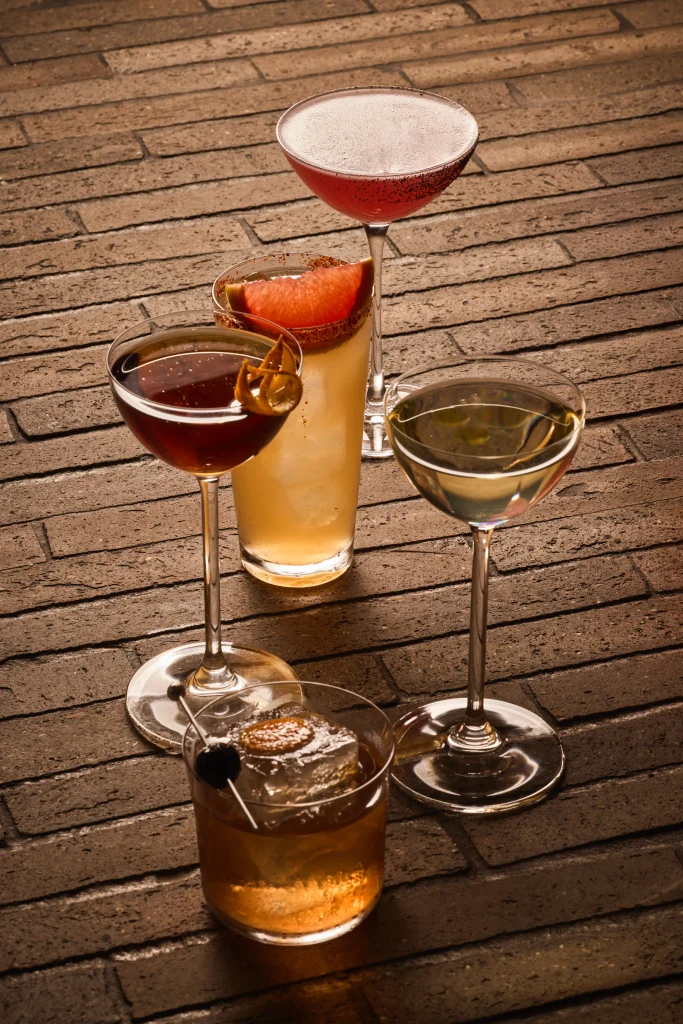
The new cocktail menu at Tragabuches, both in Marbella and Madrid, is a tribute to the essence of Andalusia. With the unmistakable signature of the Dani García universe, each creation blends tradition and creativity in perfect harmony.

The influence of fortified wines sets this cocktail selection apart. The versatility of Fino, Amontillado, and Pedro Ximénez adds deep and elegant nuances. From the Adonis PX, featuring Amontillado, red vermouth, and a touch of orange bitters, to the Fino Martini, where Fino and dry gin come together in an Andalusian take on the iconic classic.

The essence of sherry in every glass

Cocktails at Tragabuches offer a true sensory experience. The De Jerez a Manhattan reinterprets the American classic with a touch of Oloroso and cocoa bitters, while the Papirusa Martínez fuses Papirusa Fino with cherry liqueur and rosé vermouth. Sophisticated choices that elevate the art of mixology.

For those looking for a more refreshing combination, the Bamboo & Jarana blends Jarana Fino with bitter almond and orange liqueur, achieving the perfect balance between sweetness and bitterness.

Afterwork & long drinks: the casual side of Tragabuches

Enjoying an afterwork drink with the new cocktail menu at Tragabuches is an experience in itself. The selection includes options that combine bold flavors with a nod to Andalusian tradition.

The G & Ginger is a vibrant choice featuring aged rum, Oloroso, and Amontillado, while the Sherry Daiquiri reinvents the classic with Pedro Ximénez. Meanwhile, the Generoso Old Fashioned brings character with a blend of fortified wines and bourbon.

If you’re looking for a refreshing option with an innovative twist, the Rebu-Jito combines gin and Palo Cortado with the essence of a mojito. And for spiced cocktail lovers, Punta Paloma fuses aged rum with Tempranillo, rosé vermouth, and a hint of Tajín.

Alcohol-free cocktails: The 0.0 option

Non-alcoholic mixology also has its place in the new Tragabuches menu. Rojo Vibrante is a sophisticated choice with 0.0 gin, almond, and vanilla, while Paloma Floral features notes of peach, orange blossom, and a touch of Tajín.

Cocktail making: A journey through Andalucía

Tragabuches has turned its new cocktail menu into a tribute to Andalucía. Each combination is designed to highlight the richness of fortified wines and other ingredients that evoke the south of Spain.

If you’re looking for a liquid experience that blends elegance, tradition, and creativity, the new cocktail selection at Tragabuches is a must-try.

Every March 9th, the International Spanish Omelet Day was celebrated a tribute to one of the most iconic dishes in Spanish cuisine. Its origin sparks debate, its preparation has countless variations, and its flavor wins over everyone. At Tragabuches, this classic is reinterpreted with the excellence of Andalusian cuisine.

The History of the Spanish Omelet

The origin of the Spanish omelet remains a mystery. Some theories suggest it was born in Navarra in the 18th century, while others claim it became popular in Extremadura. What is certain is that this dish has transcended borders and generations.

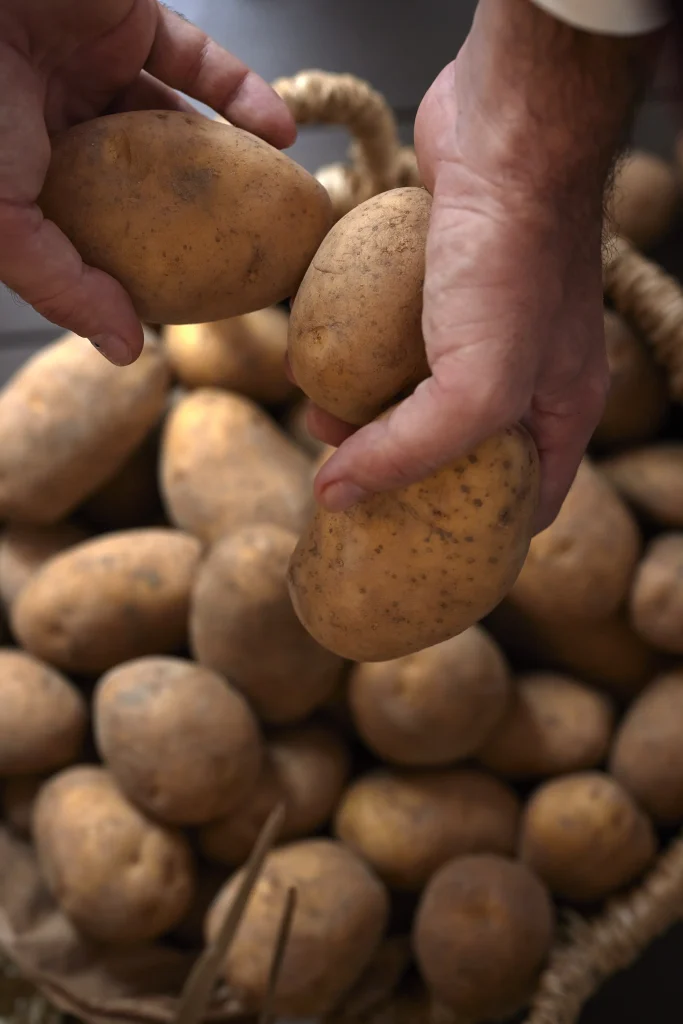
Traditionally, the Spanish omelet is made with eggs, potatoes, and salt. However, the eternal debate between “with onion” or “without onion” continues to divide fans of this beloved recipe. At Tragabuches, the Spanish omelet reaches a new level thanks to the quality of the ingredients and the impeccable technique of its chefs.

What Makes the Spanish Omelet So Special?

The secret to a great Spanish omelet lies in the quality of the ingredients. Perfectly cooked potatoes, free-range eggs, and top-tier extra virgin olive oil make all the difference. At Tragabuches, every detail is carefully considered to create a creamy texture and a perfectly balanced flavor.

Additionally, the Spanish omelet is incredibly versatile and suitable for any occasion—whether it’s a hearty breakfast, a light dinner, or the perfect tapas-style bite at the bar. Its simplicity and unmistakable taste have made it a true symbol of Spanish cuisine.

The Tragabuches Omelet: A Tribute to Tradition

At Tragabuches, the Spanish omelet is crafted with the respect that tradition deserves. Using carefully selected ingredients and flawless execution, the result is an irresistible dish. Its juicy texture and balanced flavor make it one of the restaurant’s standout offerings.

In addition to the classic recipe, Tragabuches offers two special versions, including the truffled onion Spanish omelet, a sophisticated take enhanced by the unmistakable aroma of black truffle.

Whether paired with a fine wine or as part of a tasting menu, the Tragabuches omelet proves that timeless dishes can still surprise. Because while gastronomy evolves, iconic recipes never go out of style.

Celebrate Spanish Omelet Day at Tragabuches

If there’s a perfect day to enjoy this delicacy, it’s March 9th. At Tragabuches, we pay tribute to the Spanish omelet with a version that honors tradition while carrying the unmistakable signature of our kitchen. A dish that embodies the essence of Spanish cuisine and delights with every bite.

Subscribe

By subscribing to this email you will live the GDG experience beyond the table.